Architects of a Greener Tomorrow: Inside India’s Twelve-Year Journey of Ecological Revival and Global Leadership

How a deliberate fusion of policy ambition, technological precision, and community-led action turned the tide on environmental degradation.
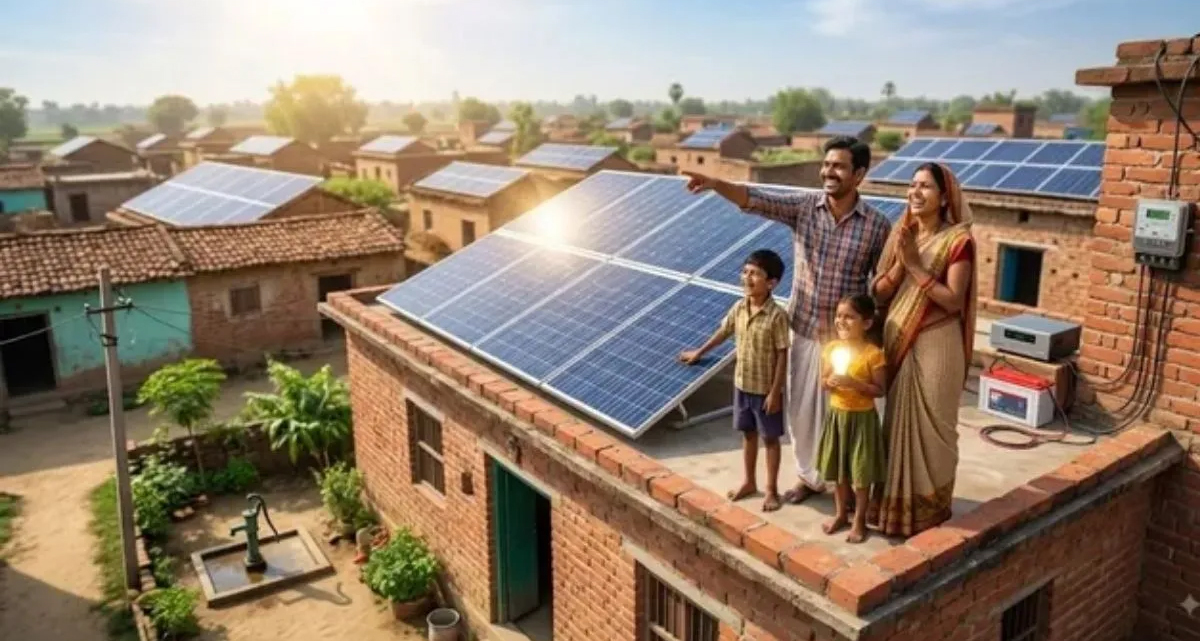
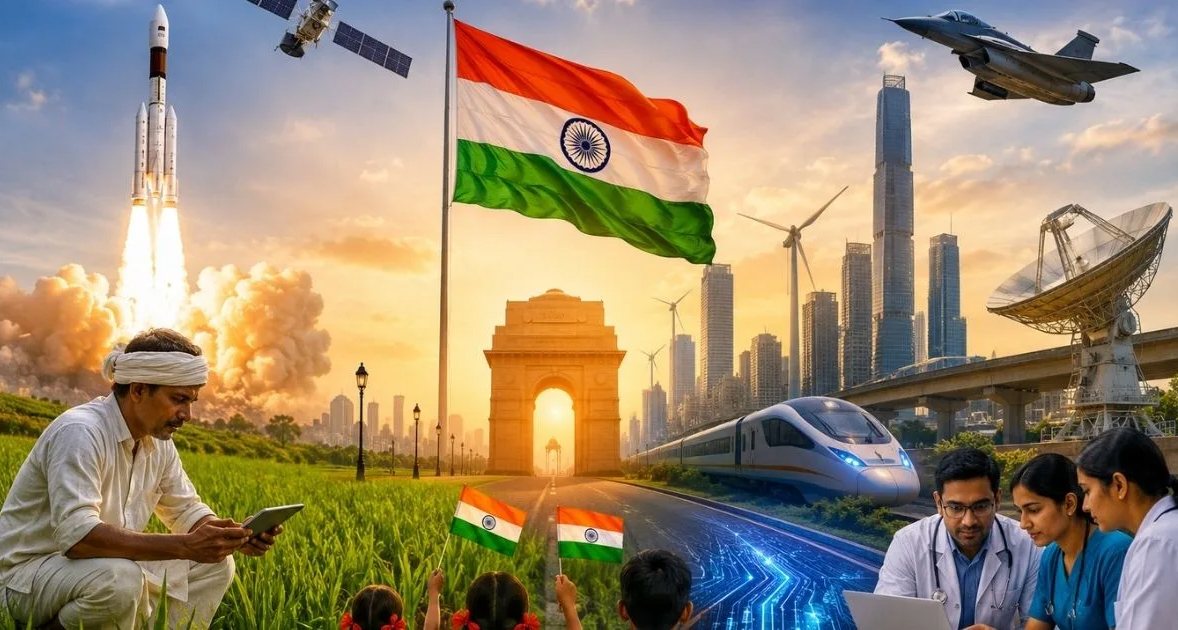
Over the past twelve years, India has orchestrated a profound environmental transformation. Driven by the foundational philosophy of Vishwaas (Trust), Nirman (Creation), and Jan Kalyaan (Public Welfare), the nation has decoupled economic ambition from ecological neglect. By integrating conservation into mainstream development, India has established a blueprint where ecological capability, national capacity, and international credibility reinforce one another.
Pillar 1: Elevating Ecological Capability and Biodiversity
Restoring fragile habitats and protecting natural capital forms the bedrock of India’s environmental strategy. Through sustained landscape-level conservation, the nation is systematically reclaiming degraded ecosystems and securing its vital natural carbon sinks.
Reviving Forest Landscapes Forests regulate regional water cycles, sustain millions of livelihoods, and serve as crucial terrestrial carbon stores. India’s forest and tree cover has expanded to 8.27 lakh sq. km—now spanning 25.17% of the country’s geographical area, with total carbon stocks reaching 30.43 billion tonnes.
Green India Mission (GIM): Launched to bolster ecosystem resilience, GIM has seen over ₹1,019.26 crore deployed across states to accelerate carbon sequestration and forest quality.
CAMPA Framework: Backed by the Compensatory Afforestation Fund Act, CAMPA facilitated over 3.20 lakh hectares of afforestation between FY 2020–21 and 2024–25, utilizing GIS tracking and the HARIT-SANKALP digital platform for transparent governance.
Nagar Van Yojana (NVY): Bridging urban expansion and nature, NVY has released ₹557.62 crore to develop 626 urban forests (Nagar Vans/Vatikas) out of a target of 1,000.
Aravalli Green Wall Initiative: Designed to combat land degradation across Rajasthan, Gujarat, Haryana, and Delhi, this initiative targets 6.31 million hectares, supported by 435 specialized nurseries that restored 36,025 hectares in 2025 alone.
Restoring River Ecosystems Water quality directly impacts aquatic biodiversity and public health. To reverse decades of industrial and municipal runoff, the Namami Gange Programme was launched in 2014 as an integrated river rejuvenation initiative. Supported by an initial ₹20,000 crore outlay and reinforced through Phase-II with an additional ₹22,500 crore, the programme focuses on advanced sewage treatment infrastructure, industrial effluent control, ghat development, and community-driven riverfront management.
Pillar 2: Expanding National Capacity for Sustainable Growth
India’s green architecture extends beyond conservation; it rewires urban and industrial operations toward circularity and disaster readiness.
Circular Economy & Waste Management: Extended Producer Responsibility (EPR) frameworks have shifted accountability to manufacturers, significantly driving up solid waste processing capacity nationwide.
Green Skills & Technology: By embedding technology into conservation, science-backed spatial planning, real-time monitoring, and green skill development programs have empowered local communities to lead stewardship efforts.
Disaster Resilience: Infrastructure guidelines have been revamped to absorb climate shocks, ensuring that physical assets remain operational during extreme weather events.
Pillar 3: Building Unshakeable Global Credibility
India’s domestic successes have elevated its status to that of a trusted global green architect. By achieving key Paris Agreement targets years ahead of schedule, the nation leads international climate diplomacy by building actionable, global alliances.
| Global Initiative | Primary Focus Area |
|---|---|
| International Solar Alliance (ISA) | Deploying solar energy solutions across climate-vulnerable and developing nations. |
| OSOWOG | Connecting regional power grids to share solar energy across time zones (One Sun One World One Grid). |
| CDRI | Building climate-resilient infrastructure systems across island states and developing economies. |
| Mission LiFE | Mobilizing global citizens toward individual, climate-positive behavioral shifts. |
| IBCA | Uniting mega-biodiverse nations to protect the world's seven major big cat species. |
By aligning high-level policy ambition with granular execution on the ground, India has demonstrated that environmental preservation is not a bottleneck to progress, but its very foundation.